
FreeDOS aims to be a complete, free, 100% MS-DOS compatible operating system.. #Operating system #MS-DOS system #Dos system #FreeDOS #OS #MS-DOS
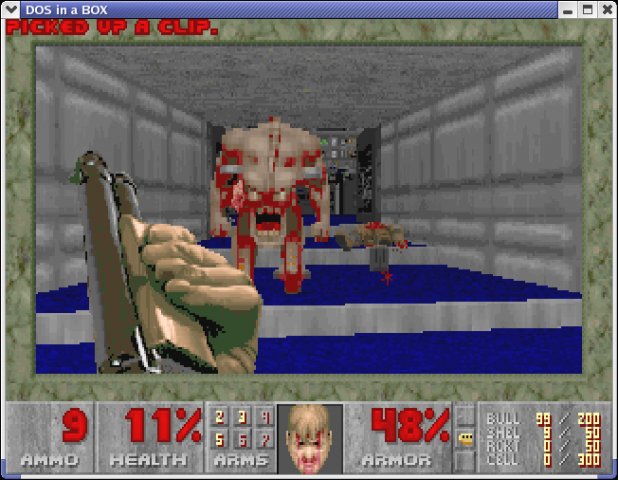
FreeDOS aims to be a complete, free, 100% MS-DOS compatible operating system. Mostly achieved except Windows compatibility - Windows standard-mode works on FreeDOS, but 386-mode / WfW 3.11 does not.
Here are some key features of "FreeDOS":
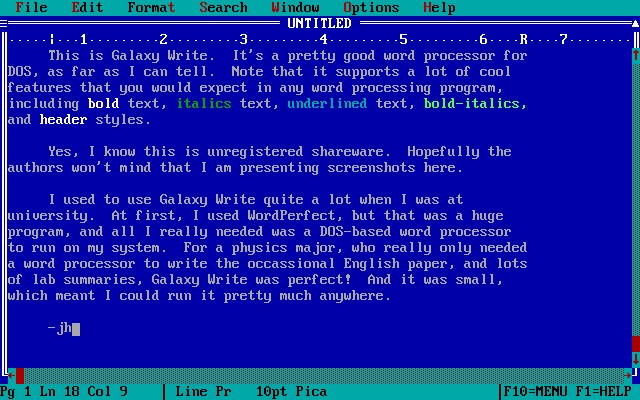
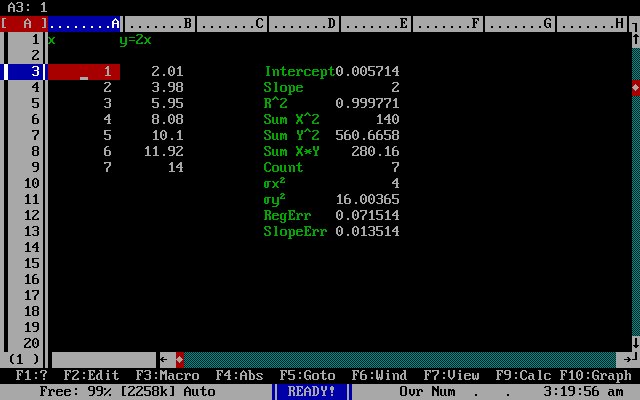
� Easy multiboot with Win95-2003 and NT/XP/ME � FAT32 file system and large disk support (LBA) � LFN support (on command line with 4DOS, which is now freeware: 4DOS for OS/2 is even open source) � LBACACHE - disk cache (harddisks in CHS and LBA mode, diskette) � Memory Managers: HIMEM, EMM386, UMBPCI � SHSUCDX (MSCDEX replacement) and CD-ROM driver (XCDROM) � CUTEMOUSE - Mouse driver with scroll wheel support � FDAPM - APM info/control/suspend/poweroff, ACPI throttle, HLT energy saving... � XDMA - UDMA driver for DOS: up to 4 harddisks � MPXPLAY - media player for mp3, ogg, wmv... with built-in AC97 and SB16 drivers � 7ZIP, INFO-ZIP zip & unzip... - modern archivers are available for DOS � EDIT / SETEDIT - multi window text editors � HTMLHELP - help viewer, can read help directly from a zip file � PG - powerful text viewer (similar to V. D. Buerg's LIST) � many text mode programs ported from Linux thanks to DJGPP � GRAPHICS - greyscale hardcopy on ESC/P, HP PCL and PostScript printers
FreeDOS was previously known as "Free-DOS" and originally as "PD-DOS." For a little trip down memory lane: In 1994, I was a physics student at the University of Wisconsin-River Falls. Most of my work for school had been done using DOS - writing programs, dialing up to the university computer, network, analysing lab data, etc. I really loved DOS; I did everything with it. I had a '386 desktop system in my dorm room and an XT laptop that I would carry around with me to do work "on the go".
What's new in FreeDOS 1.1:
- FreeDOS kernel 2040 (Bart Oldeman, Jeremy Davis and others. Should fix fat32 file corruption).
- mtcp (Michael Brutman), a suite of high-performance TCP/IP applications for any x86 computer.
- an initial attempt at USB controller support (Bret Johnson). So far only UHCI (Intel/Via USB1.1 12mbit/1.5mbit).
- new Syslinux features (see installation notes, below) including free CD-driver for non-emulation booted CD/ISO.
FreeDOS 1.1
add to watchlist add to download basket send us an update REPORT- runs on:
- Linux
- filename:
- fd11src.iso
- main category:
- System
- developer:
- visit homepage
IrfanView 4.67
Bitdefender Antivirus Free 27.0.35.146
Windows Sandbox Launcher 1.0.0
calibre 7.9.0
4k Video Downloader 1.5.3.0080 Plus / 4.30.0.5655
ShareX 16.0.1
Microsoft Teams 24060.3102.2733.5911 Home / 1.7.00.7956 Work
Context Menu Manager 3.3.3.1
7-Zip 23.01 / 24.04 Beta
Zoom Client 6.0.3.37634
- Context Menu Manager
- 7-Zip
- Zoom Client
- IrfanView
- Bitdefender Antivirus Free
- Windows Sandbox Launcher
- calibre
- 4k Video Downloader
- ShareX
- Microsoft Teams
