
A bootable Live-CD Linux operating system based on KNOPPIX and Debian GNU/Linux.. #Linux distribution #Operating system #Debian Linux #Debian #LiveCD #Linux
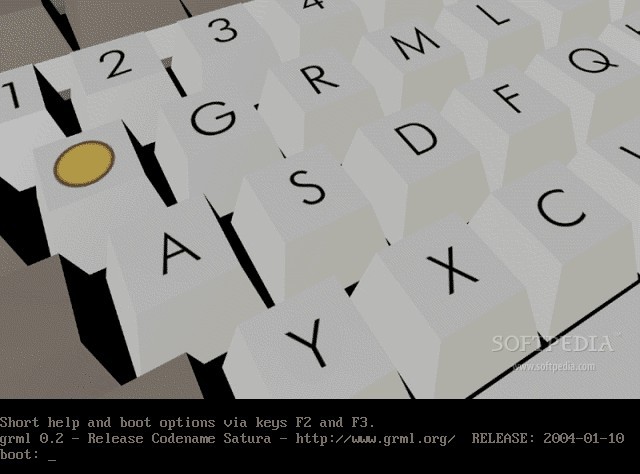
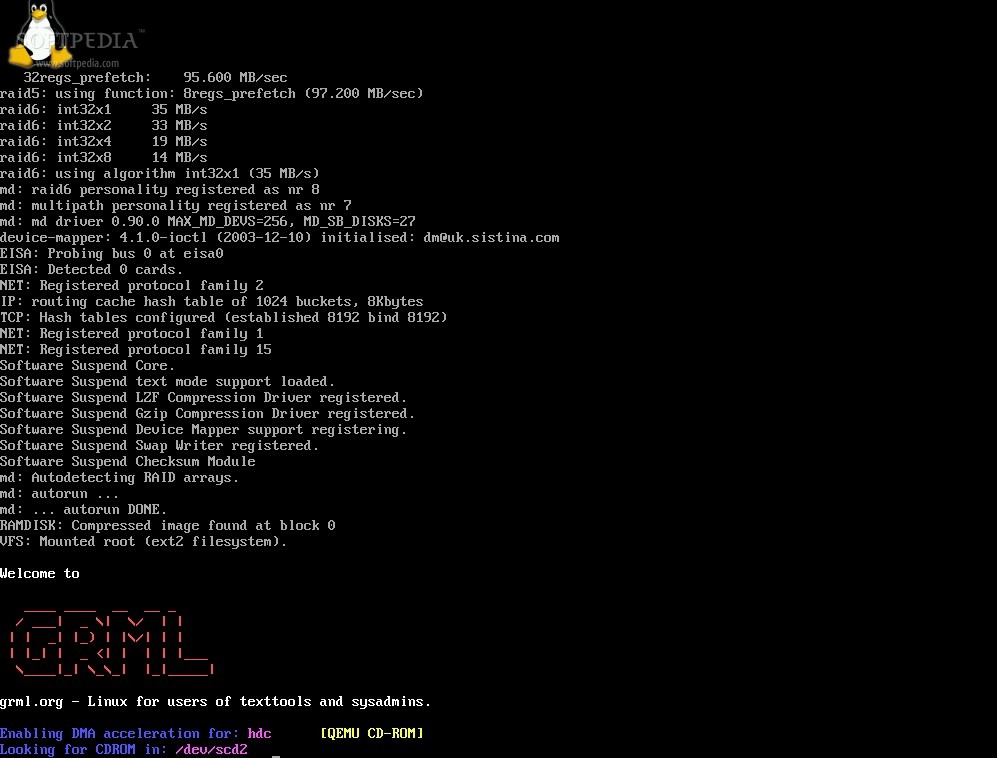
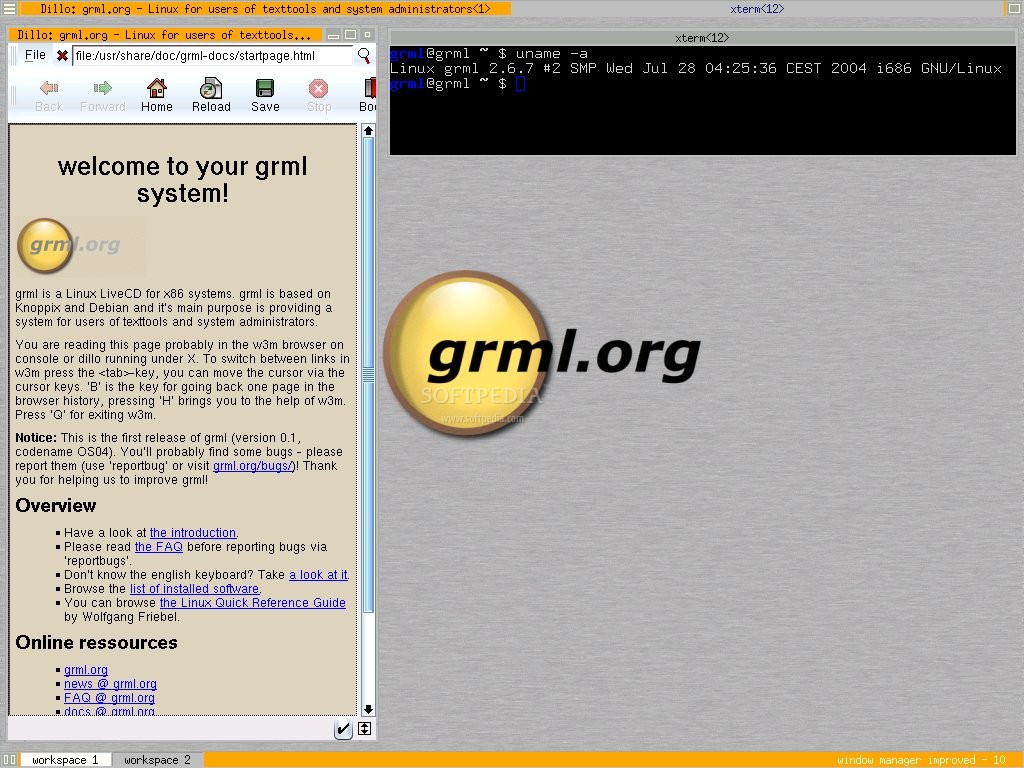
Grml is an open source Linux distribution based on the Debian GNU/Linux operating and designed from the ground up to by used by system administrators and end-users who prefer text-mode tools.
It can be used as a system rescue CD, offers out-of-the-box usability for the visually impaired, and automatic hardware detection. It’s distributed in two separate editions, a small one with only a few essential packages and no desktop environment, as well as a full flavor with extra applications and a lightweight window manager.
It’s available for download as Live CD ISO images, two for each edition, supporting both 64-bit and 32-bit hardware platforms. They can be burned to blank CD discs or written to USB flash drives.
The distribution can be easily installed to a local disk drive, but only from the command-line prompt when booting the live environment (available in both editions). It also features a cryptsetup, losetup, mount and mkfs wrapper called grml-crypt.
The Live CDs feature a custom boot prompt, from where users can start an existing operating system from the first disk drive, jump to an old-style isolinux prompt, as well as to run GRUB2, iPXE, FreeDOS, MirOS, Memtest86+, HDT (Hardware Detection Tool), as well as an all-in-one image.
Default boot options include debug mode, disable framebuffer, disable kernel mode-setting, enable SSH (with random password), forensic mode, graphical mode, copy to RAM, persistency mode, serial console, and German settings.
The Full edition comes with the Midnight Commander two-panel file manager, GParted disk partitioning tool, Xpdf PDF viewer, XTerm terminal emulator, Telnet client, Irssi IRC client, Wireshark network scanner, Iceweasel web browser, and many other useful tools.
Grml is a decent and minimal Debian-based Live CD for system administrators. It offers a great selection of system packages to choose from, specifically designed for system recovery and rescue tasks.
Grml 2018.12
add to watchlist add to download basket send us an update REPORT- runs on:
- Linux
- filename:
- grml64-full_2018.12.iso
- main category:
- Linux Distributions
- developer:
- visit homepage
7-Zip 23.01 / 24.04 Beta
4k Video Downloader 1.5.3.0080 Plus / 4.30.0.5655
Zoom Client 6.0.3.37634
calibre 7.9.0
Context Menu Manager 3.3.3.1
Windows Sandbox Launcher 1.0.0
Bitdefender Antivirus Free 27.0.35.146
IrfanView 4.67
ShareX 16.0.1
Microsoft Teams 24060.3102.2733.5911 Home / 1.7.00.7956 Work
- IrfanView
- ShareX
- Microsoft Teams
- 7-Zip
- 4k Video Downloader
- Zoom Client
- calibre
- Context Menu Manager
- Windows Sandbox Launcher
- Bitdefender Antivirus Free