
This is the Electronic Laboratory Live CD edition of the Fedora Linux operating system. #Electronic Lab #Live CD #Linux distribution #Fedora #Electronic #LiveCD
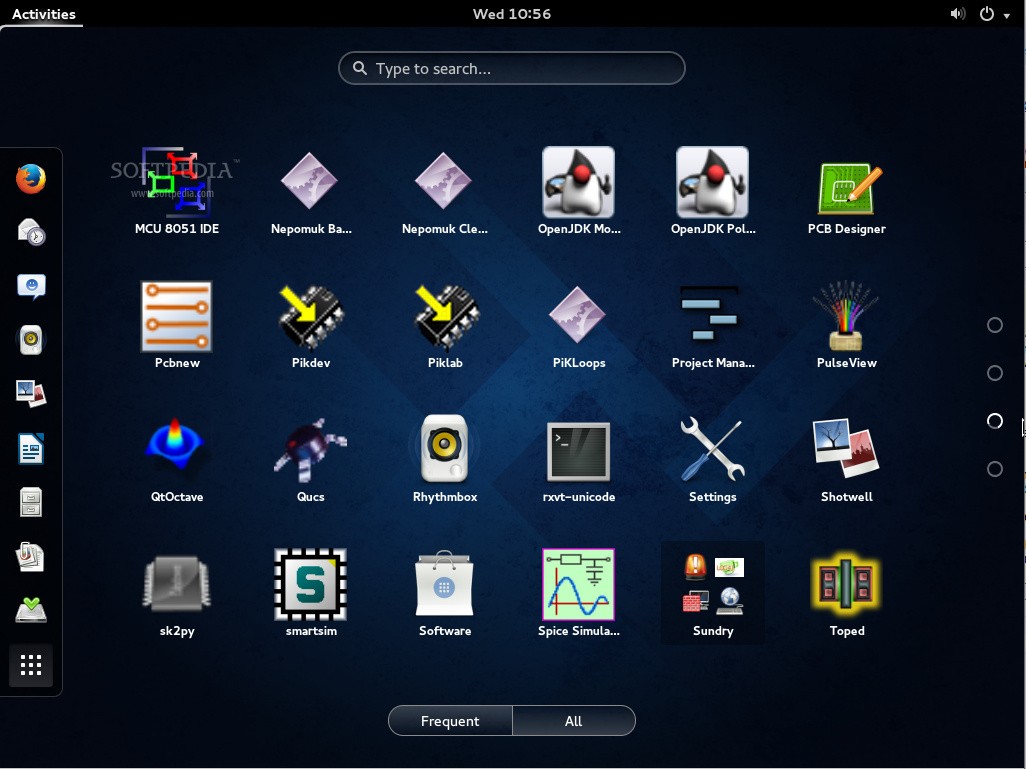
Fedora Python Classroom Lab Live CD is an open source Linux operating system targeted mainly towards Python developers. It is based on the latest Fedora technologies and offers a complete Python setup, which comprised of reliable and free embedded design utilities that will help anyone to keep up with the current technological race.
This Fedora remix is available for download as two Live DVD ISO images of approximately 2GB in size, which means that they can only be burned onto DVD discs or deployed to USB flash drives of 4GB or higher capacity.
The boot menu is identical with the one of other Fedora remixes, allowing users to start the live environment with default settings. The "Troubleshooting" will also allow the user to start the live session in safe graphics mode, run a RAM test, boot from the local drive, and test the medium for defects (only if using a DVD media).
An Python Classroom laboratory on top of the modern GNOME desktop environment
The default desktop environment for this Fedora respin is GNOME, which is also used on the main Fedora Live CD edition. It's comprised of a single panel from where users can interact with opened applications, search the entire system for files and apps, cycle between multiple workspaces, as well as to lunch apps.
Summing up, Fedora's Python Classroom Lab Live CD edition is a Linux distribution dedicated to support the innovation and development brought by the open source Python community.
Fedora Python Classroom Lab Live CD 31
add to watchlist add to download basket send us an update REPORT- runs on:
- Linux
- filename:
- Fedora-Python-Classroom-Live-x86_64-30-20190427.n.0.iso
- main category:
- Linux Distributions
- developer:
- visit homepage
Zoom Client 6.0.0.37205
Bitdefender Antivirus Free 27.0.35.146
calibre 7.8.0
paint.net 5.0.13 (5.13.8830.42291)
Windows Sandbox Launcher 1.0.0
ShareX 16.0.1
Microsoft Teams 24060.2623.2790.8046 Home / 1.7.00.7956 Work
IrfanView 4.67
7-Zip 23.01 / 24.04 Beta
4k Video Downloader 1.5.2.0077 Plus / 4.30.0.5655
- IrfanView
- 7-Zip
- 4k Video Downloader
- Zoom Client
- Bitdefender Antivirus Free
- calibre
- paint.net
- Windows Sandbox Launcher
- ShareX
- Microsoft Teams