
This project provides a complete and Open Source RRDTool-based graphing solution for Linux. #RRDTool frontend #RRDTool GUI #RRDTool user interface #RRDTool #Graph #Graphing
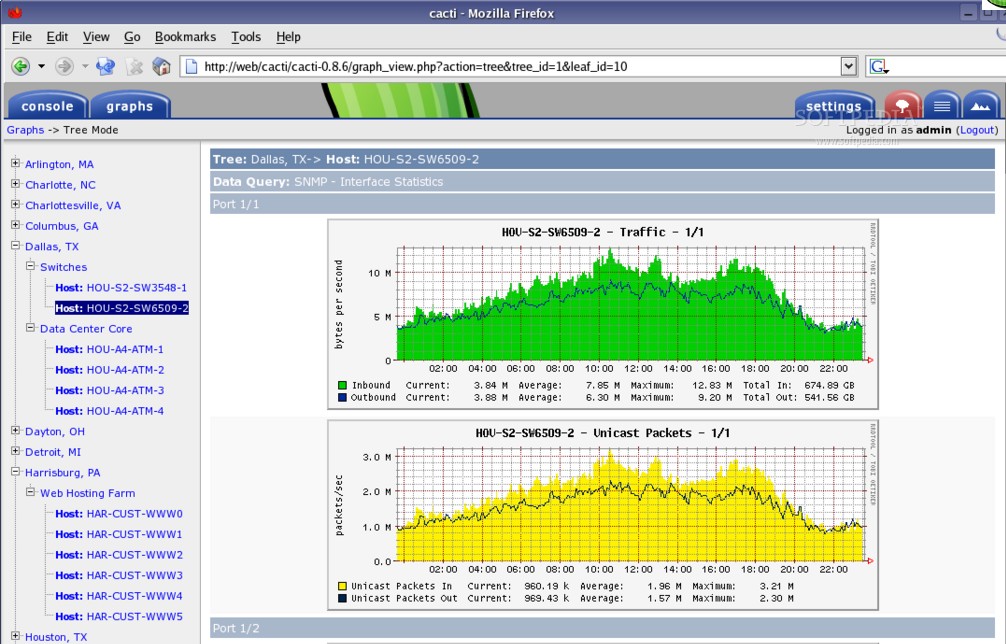
Cacti is an open source, platform-independent and freely distributed web-based software that has been tailored specifically for users who are looking for a complete network graphing solution, which can be used to control the power of RRDTool's graphing and data storage functionality.
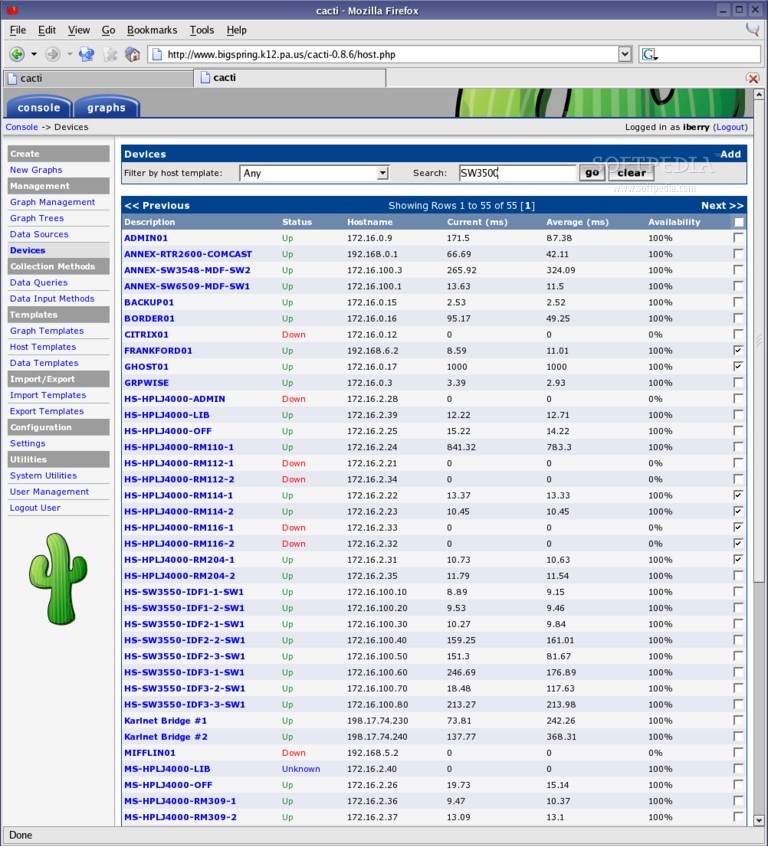
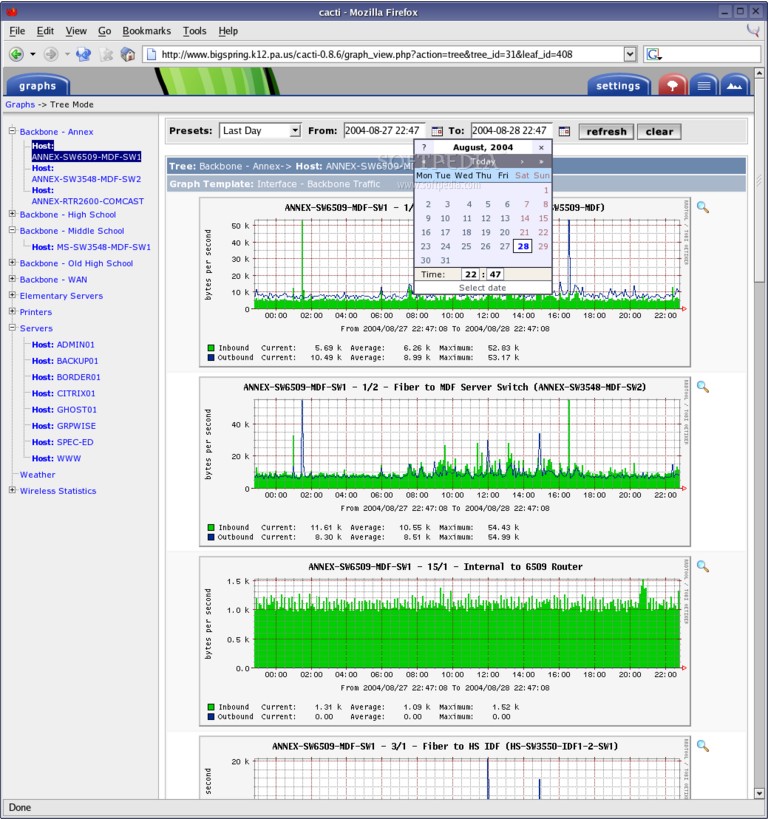
In other words, the Cacti project is a GUI (Graphical User Interface) for the RRDTool command-line program, featuring a fast poller, advanced graph templating, multiple data acquisition methods, out-of-the-box user management functionality, and numerous other attractive features that can be viewed below at a glance.
Key features include supports for an unlimited number of graphs, fast re-sequencing and automatic grouping of GPRINT graphs in AREA, LINE[1-3] and STACK items, auto-padding support, as well as handling of graph data using the CDEF math functions that are built into the RRDTool program, which can be configured and used globally on each graph.
The application comes with support for various graph item types that are supported by RRDTool, including GPRINT, HRULE, STACK, AREA, LINE[1-3], VRULE and COMMENT, support for generating data sources for gathering remote or local data, support for more than one data source per RRD file, and support for using RRD files that are stored anywhere on the file system.
Another interesting feature is the ability to customize the software’s RRS (Round Robin Archive) settings, allowing the user to gather data on non-standard timespans, while at the same time being able to store different amounts of data.
As mentioned, Cacti is a web-based application, which means that it is written in the PHP server-side programming language and can only be deployed on top of a supported web server (e.g. Apache, nginx).
It can be used via a supported web browser, such as Mozilla Firefox, Google Chrome, Opera, Internet Explorer or Safari. The program is supported on Linux, BSD, Solaris, Windows and Mac OS X operating systems, and it’s compatible with both 64-bit and 32-bit computer architectures.
Cacti 1.2.8
add to watchlist add to download basket send us an update REPORT- runs on:
- Linux
- filename:
- cacti-1.2.8.tar.gz
- main category:
- System
- developer:
- visit homepage
ShareX 16.0.1
Bitdefender Antivirus Free 27.0.35.146

Zoom Client 6.0.3.37634

Microsoft Teams 24060.3102.2733.5911 Home / 1.7.00.7956 Work
Windows Sandbox Launcher 1.0.0
4k Video Downloader 1.5.3.0080 Plus / 4.30.0.5655

7-Zip 23.01 / 24.04 Beta
IrfanView 4.67
Context Menu Manager 3.3.3.1
calibre 7.9.0
- IrfanView
- Context Menu Manager
- calibre
- ShareX
- Bitdefender Antivirus Free
- Zoom Client
- Microsoft Teams
- Windows Sandbox Launcher
- 4k Video Downloader
- 7-Zip