
VESTA For Linux
A 3D visualization program for structural models and 3D pixel data such as electron/nuclear densities. #3D visualization #Structural models #Nuclear densities #VESTA #3D #Visualization
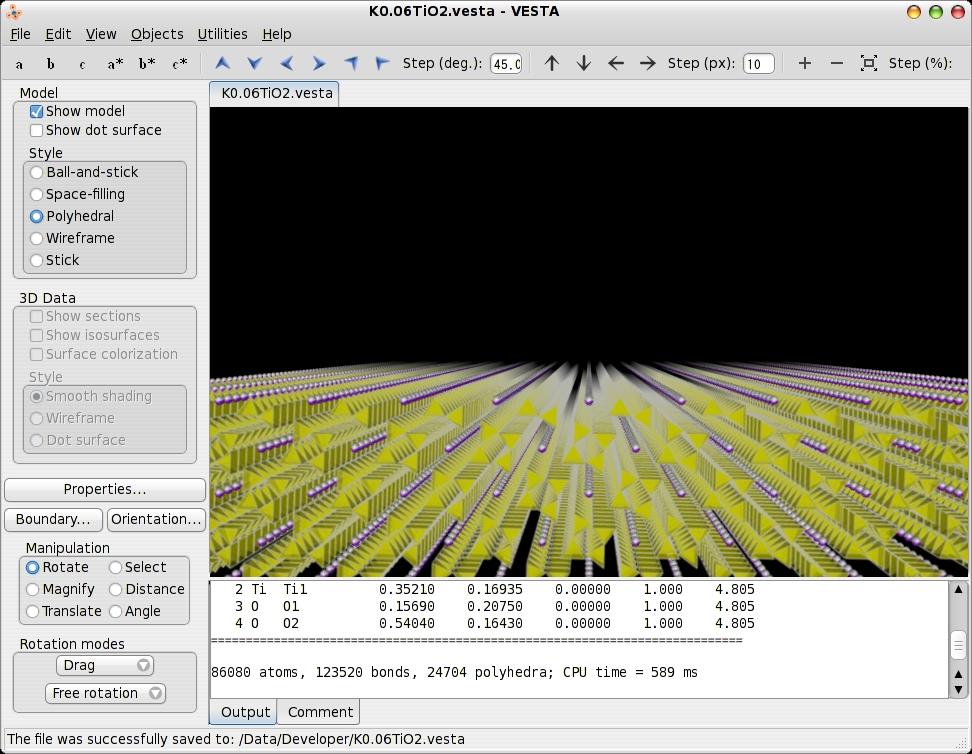
VESTA software is a 3D visualization program for structural models and 3D pixel data such as electron/nuclear densities.
VESTA stands for "Visualization of Electronic and STructural Analysis". It is a cross-platform program written in the C++ language on the basis of OpenGL technology.
Structural models are represented as ball-and-stick, space-filling, polyhedral, wireframe, stick, and thermal-ellipsoid models. Ball-and-stick, wireframe, and stick models can be overlapped with dotted surfaces corresponding to van der Waals radii.
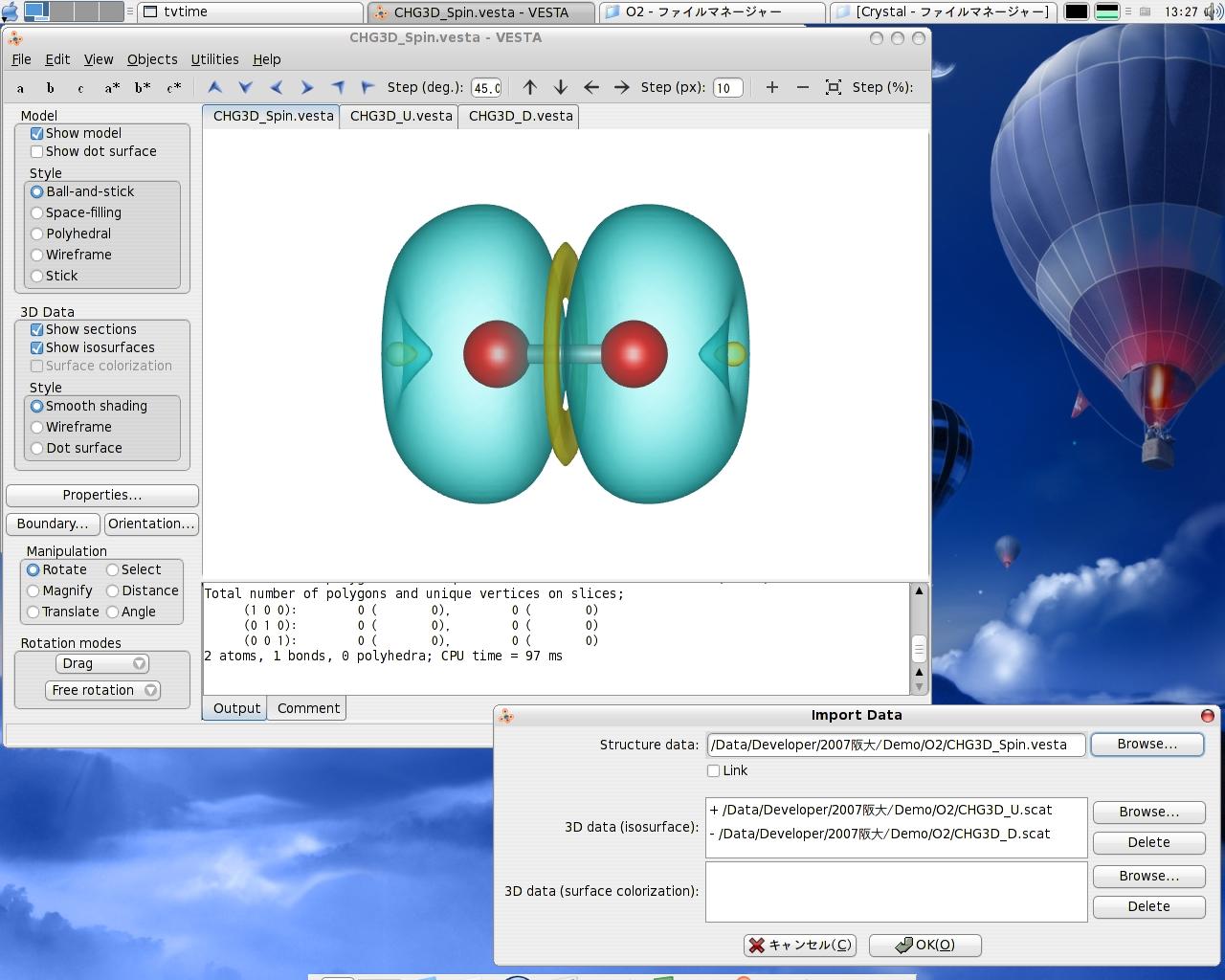
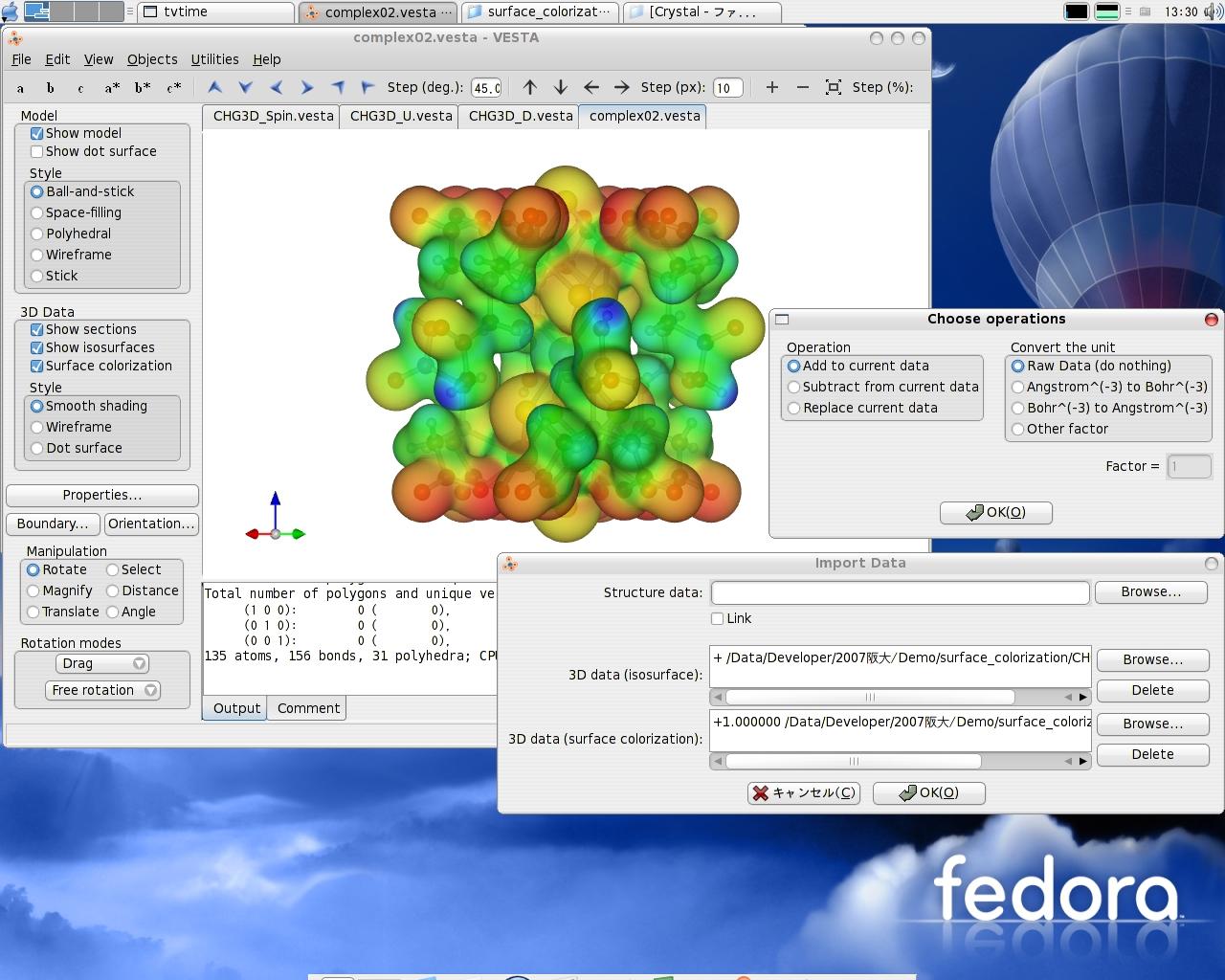
Electron/nuclear densities, wave functions, and electrostatic potentials are visualized as isosurfaces, bird's-eye views, and two-dimensional (2D) maps. VESTA has a feature of surface colorization to show another kind of a physical quantity at each point on isosurfaces. Translucent isosurfaces can be overlapped with a structural model.
VESTA can read 38 file formats such as CIF, ICSD, INS, and PDB. Electron densities calculated by WinGX (Fourier synthesis), PRIMA (MEM), and superflip (charge flipping) can be directly read in. VESTA can handle virtually unlimited number of objects such as atoms, bonds, polyhedra, and polygons on isosurfaces. VESTA supports multiple windows, each of which may contain multiple tabs corresponding to files.
System requirements
What's new in VESTA 2.1.3:
- Fixed a bug that resulted in a crash after clicking "Remove symmetry" button twice.
- Enhanced the behavior of "Remove duplicate atoms" button so that duplicate atoms slightly off-centered from a special position will be merged into a single site at the special position.
- Fixed a problem in Mac OS X version that "2D Data Display" window didn't render any graphics unless the window is once resized. This bug exists in v2.0.2 to v2.1.2.
- Added support for file format of VASP 5.2 or later.
VESTA 2.1.3
add to watchlist add to download basket send us an update REPORT- runs on:
- Linux
- main category:
- Science and Engineering
- developer:
- visit homepage
7-Zip 23.01 / 24.04 Beta
Zoom Client 6.0.4.38135
4k Video Downloader 1.5.3.0080 Plus / 4.30.0.5655
Microsoft Teams 24060.3102.2733.5911 Home / 1.7.00.7956 Work
ShareX 16.0.1
calibre 7.9.0
Context Menu Manager 3.3.3.1
Windows Sandbox Launcher 1.0.0
IrfanView 4.67
Bitdefender Antivirus Free 27.0.35.146
- Windows Sandbox Launcher
- IrfanView
- Bitdefender Antivirus Free
- 7-Zip
- Zoom Client
- 4k Video Downloader
- Microsoft Teams
- ShareX
- calibre
- Context Menu Manager